
















Scientists have long attempted to treat Alzheimer’s disease by targeting sticky “plaques” that accumulate in the brain. These plaques are really a sign of a larger problem. However, according to a recent study, fixing the brain’s “drainage system” may be the true solution.
Every day, the brain generates a large number of harmful proteins. In order to keep your brain healthy, the blood arteries in your brain remove this waste, acting as a recycling system. However, in patients suffering from Alzheimer’s, this mechanism becomes blocked and thus malfunctions. The waste remains in the brain and begins to impair cognition and memory.
Using microscopic particles known as nanoparticles, researchers from the Institute for Bioengineering of Catalonia and their collaborators have created a novel form of medication. These particles are the medication, not merely a chemical. They assist the blood arteries in resetting and begin functioning normally once they enter the brain. This enables the brain to eventually eliminate the above mentioned waste on its own.
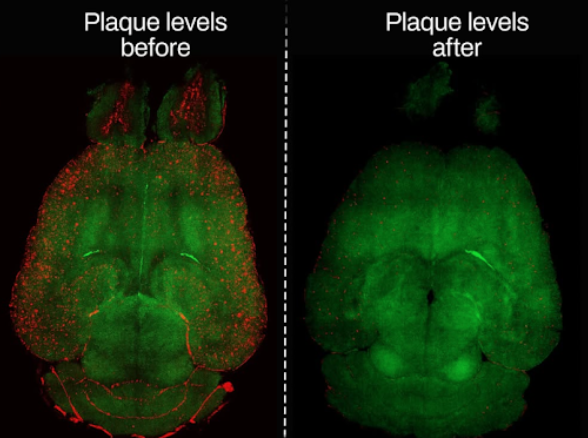
This strategy worked very quickly in recent tests conducted on a group of mice. The level of harmful protein in the mice’s brains decreased by more than half after just one hour after the medication was administered. The long-term outcomes were much more remarkable. A few doses of the drug were given by researchers to older mice that were already showing signs of brain deterioration. Months later, the same mice were acting just like healthy mice, and could acquire and retain information at a seemingly normal rate.
Even though these findings are quite intriguing, it is crucial to keep in mind that this procedure has only been tested on mice thus far. Scientists still have a lot more work to perform to ensure that this is both safe and effective for people. Regardless, the study above showcases major advancements in the field of Alzheimer’s research. It implies that the damage produced by Alzheimer’s may be slowed down or perhaps reversed if we can assist the brain in fixing its own plumbing. These findings change the focus from merely fighting the disease to fixing the brain, and may have the potential to completely transform the medical field.