















Over the course of this year, tensions between Iran and the alliance between Israel and the United States have grown prominent on the world stage. Both parties have been increasingly concerned over nuclear programs and development and support for certain organizations in the Middle East, such as Hamas in Gaza and Hezbollah in Lebanon.
Additionally, Iran’s government has encountered significant challenges since the outbreak of nationwide protests in 2025. The United States and Iran had previously developed agreements over nuclear agreements, though they later collapsed, leading American and Israeli leaders to worry about Iran’s progression in nuclear weapon capability.
Later, the United States and Israel inconspicuously coordinated an attack against Iran. Both nations prepared their militaries for the attack. On February 27, 2026, President Trump approved the plan and launched the attacks on Feburary 28. The attack started with various cyber attacks and later involved hundreds of U.S. and Israeli fighter jets. The attacks were targeted at Iranian military bases, nuclear facilities, naval forces, and government centers.
During these attacks, Iran’s supreme leader, Ayatollah Ali Khomeinei, was killed in Iran’s capital, Tehran. Iranian forces retaliated, and the fighting quickly spread across the Middle East. One motivating factor in these attacks includes an increase in the price of oil shipped through the Strait of Hormuz. However, this conflict has caused the deaths and displacements of thousands.
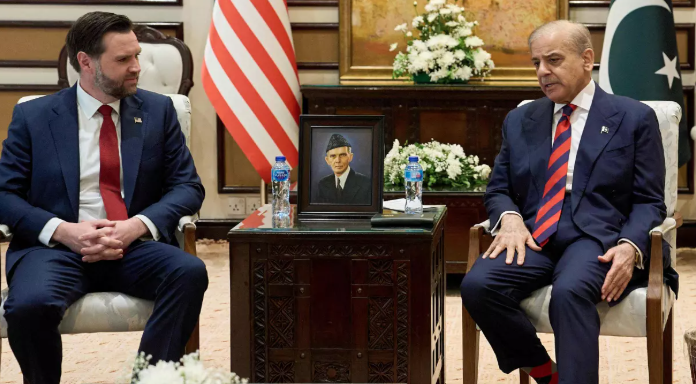
After weeks of conflict between Iran and the United States, Pakistan stepped in as a mediator to coordinate a ceasefire agreement. Originally, Pakistan suggested a 45-day ceasefire, though this proposal was rejected by Iran. Multiple rounds of negotiations took place in Islamabad, Pakistan, with all but one deal being rejected by Iran.
President Trump played a particularly major role in pressuring Iran to accept the agreement. He warned that the United States would continue launching attacks on Iran’s power plants if a deal was not quickly reached. Because of this, discussions in Islamabad intensified, and a final agreement was reached; the ceasefire would last two weeks, aiming to halt military attacks, reopen trade routes, and encourage diplomatic conversations.
The ceasefire was officially announced on April 7, 2026. Its major outcomes included Iran’s reopening of the Strait of Hormuz and continued peace discussions. Despite the agreement, however, tensions continued between the warring nations.
Both Iran and the United States have accused each other of violating the ceasefire through either missile fire or drone activity. Moreover, since Iran accused the U.S. and Israel of violating the rules of the ceasefire, the Strait of Hormuz was partially blocked again, prompting the U.S. to resume naval operations in the area. Though this ceasefire brought a temporary pause to an increasing conflict, a true peace is yet to be reached between Iran, Israel, and the United States.