











It is a cool 64 degrees Fahrenheit in Tehran, Iran on the morning of February 28, 2026, when, out of nowhere, explosions begin to rattle the entire country awake. Just the day prior, as U.S. President Donald Trump boarded the Air Force One aircraft, he had authorized an offensive against Iran, sparking what is now known as Operation Epic Fury.
Tensions between both sides had been slowly escalating throughout the few weeks prior to the attack. The U.S. being concerned regarding the threat that it could pose on its mainland and its allies, had been negotiating with Iran since mid-April last year regarding its enrichment of military-grade uranium, a material that could be used to make high-range nuclear weapons.
Negotiations continued for months to follow, up until February 2026, when Iran denied most of the United States’ propositions and insisted on continuing its nuclear program with the goal of developing nuclear weapons. Trump was left impatient and frustrated as a result of this, saying that he was “not happy with the way [the negotiations are] going.” During his boarding of the Air Force One, the double-decker 747 plane tasked with transporting the president, he walked up to General Caine, saying “Operation Epic Fury approved … Good luck.”
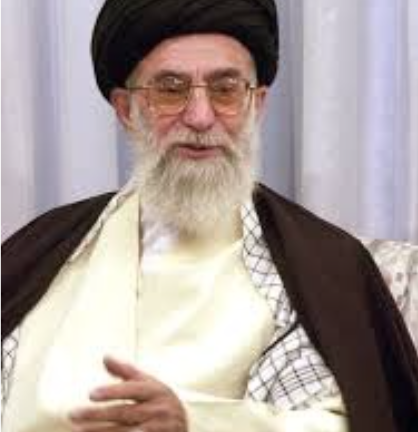
The next day, at 1:15 AM Eastern Time, the operation commenced. Not even 10 minutes after missiles started firing, 30 Israeli missiles hit Ayatollah Ali Khomeini’s compound in Tehran, killing him, his Minister of Defense, and the commander of the Islamic Revolutionary Guard Corps (IRGC). The IRGC is a terrorist organization that is tasked with “defending Iran’s regime,” which it often supports through murdering innocent, usually Israeli, civilians.
Notably, the IRGC had also been conspiring since November of last year to kill Trump and Jewish citizens of the United States. The strike also killed 2 of Khomeini’s other commanders. Throughout the rest of the day, the U.S. continued to strike targets throughout Iran, with reports saying that more cities, “including Qom, Kermanshah, Isfahan, and Karaj” had been struck. Within only the first 36 hours, over 3,000 precision-guided missiles and interceptors had been used against Iran.
As the war continued to escalate extremely quickly, civilian targets in Saudi Arabia, the UAE, Kuwait, and the Kurd region of Iraq were targeted by Iran in missile strikes. U.S. military bases in Qatar, Kuwait, UAE, and Bahrain were also hit, severely damaging the U.S.’s ability to defend itself against future missile attacks from the Middle East and Asia. Trump also called on the Kurds to fight back against the Iranian regime. According to Middle Eastern sources such as Al Jazeera, 13 people have already died as of early March 2026, and over 2,000 people have been reported injured in Israel due to Iranian strikes.
As the war has progressed over the past few days, American Democrats have begun to express concerns over how the conflict could affect the U.S. Among these issues is the heavy usage of U.S. and Israeli munitions, and how it could affect the U.S.’s ability to defend itself if another war were to arise. In the wake of the death of Ayatollah Khomeini, Iran has elected his son as the Supreme Leader of Iran.
Additionally, certain countries that have been targeted by Iran in the Persian Gulf have been struggling to defend against the barrages of Iranian missiles being hurled at them. Iranian civilians have started to go out on the streets, partying and celebrating the death of the leader who killed their brothers and deprived them of their human rights. Time is yet to tell what will come out of the current conflict, and whether Trump decides to continue taking the toll of a conflict in Iran is up to chance.